Introduction
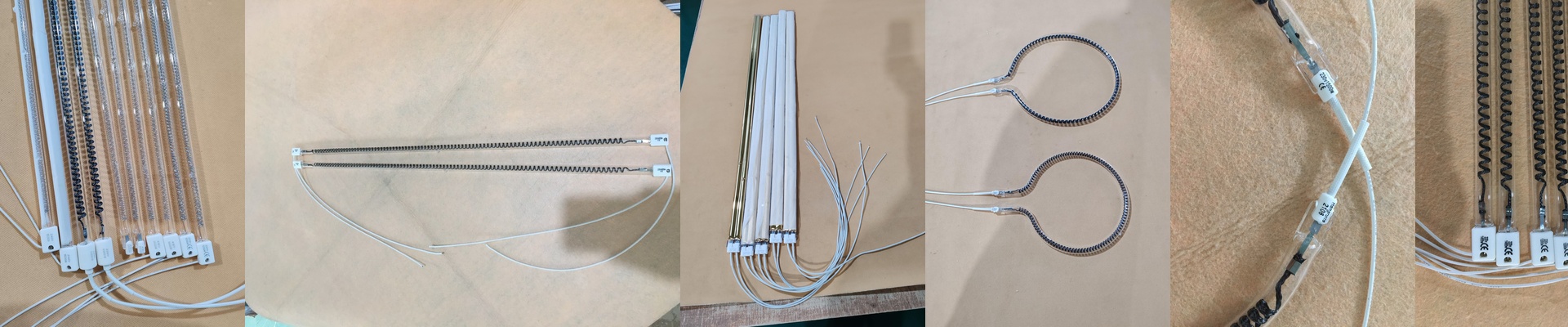
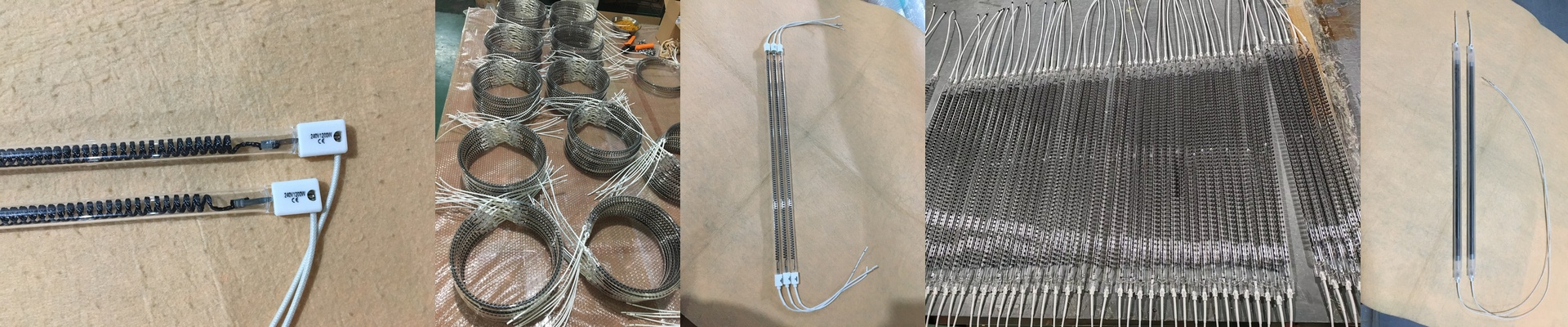
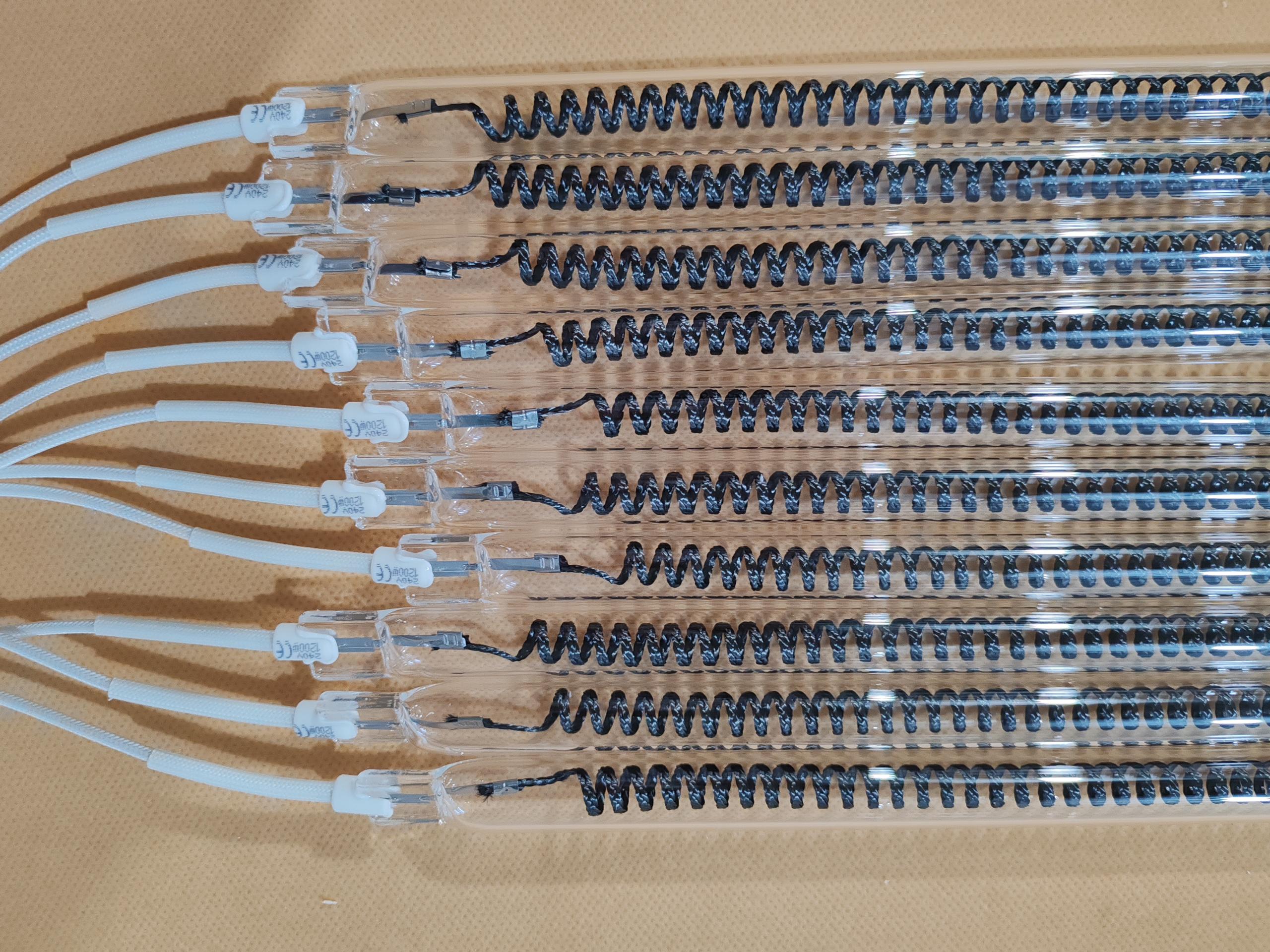
We built the IR carbon heat lamp for one reason: to get industrial lines moving faster. It’s a direct-radiant electric heater, made for jobs that demand immediate heat—curing, drying, and line heating where you can’t afford to wait around for an oven to catch up. Inside, you’ve got a carbon filament tucked into a quartz envelope. The whole point? To blast a focused beam of infrared exactly where you need it, so your process temperature climbs fast. If your line needs heat without the lag, this is your compact, responsive answer.
The Nitty-Gritty
Let’s talk performance. It all starts with the power setup. We run a 2500W load on a 400V circuit. Why? Because that gives you serious heat density in a small footprint, without drawing a monster amount of current on the plant floor. That voltage choice also cuts down on power loss. It means you can run longer cables without worrying about voltage drop—but yes, you’ll need a control circuit and insulation rated for 400V. The 300mm tube length wasn’t an accident, either. It strikes a sweet balance: enough radiating surface to create a stable hot zone, but still compact enough to slip into tight machine frames. So you get localized heating without having to redesign the whole bay.
What It’s Made Of
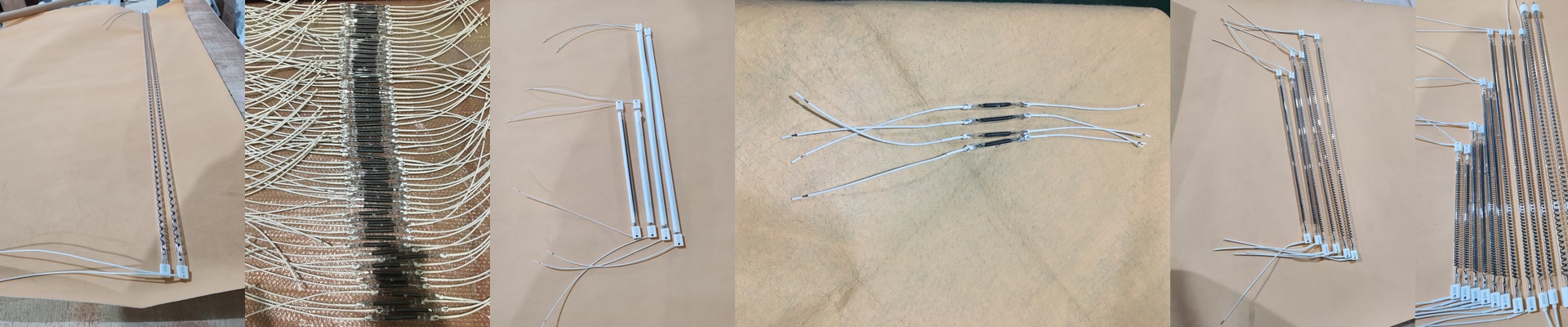
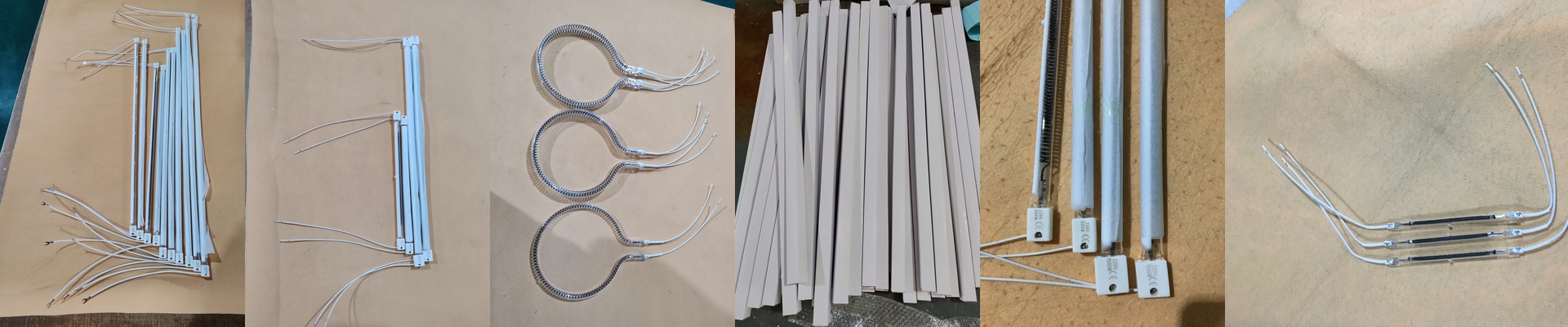
The carbon filament gets hot—fast. It cranks out shortwave infrared that really pairs well with organic coatings and plastics. And the quartz envelope? It’s tough. It handles the shock of rapid on/off cycling without cracking, and it stays clear so the radiation stays consistent. And that R7s connector? Not an afterthought at all. It gives you a solid, two-contact termination that holds up under high heat at the lamp ends. Plus, it’s a standard interface, so mounting and replacement are straightforward. Wiring it up is simple, and it’s a true drop-in fit for any fixture designed for R7s.
On The Line, Where It Counts
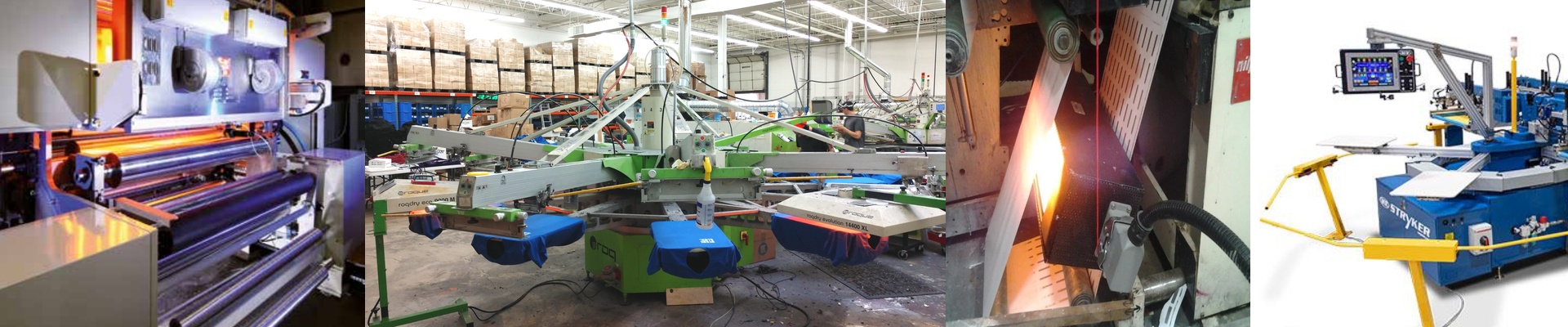
This is where the lamp really shines. It’s perfect for jobs that need a rapid temperature rise and precise control—like pre-heating before extrusion, spot curing on a moving web, or drying printed materials. Because the heat is concentrated, you’re hitting the target directly, not just warming up the air around it. Now, the trade-off is real. This kind of heat density means you’ve got to plan for cooling and clearance. Keep the airflow flowing the way it’s designed, and make sure your reflectors are clean and lined up. That way, your heating stays repeatable. Run it within spec, and you get predictable output and a lightning-fast response. The payoff? Steady throughput and fewer headaches adjusting the line.