The Power Behind the Heat: Why This Lamp is Built to Move Fast
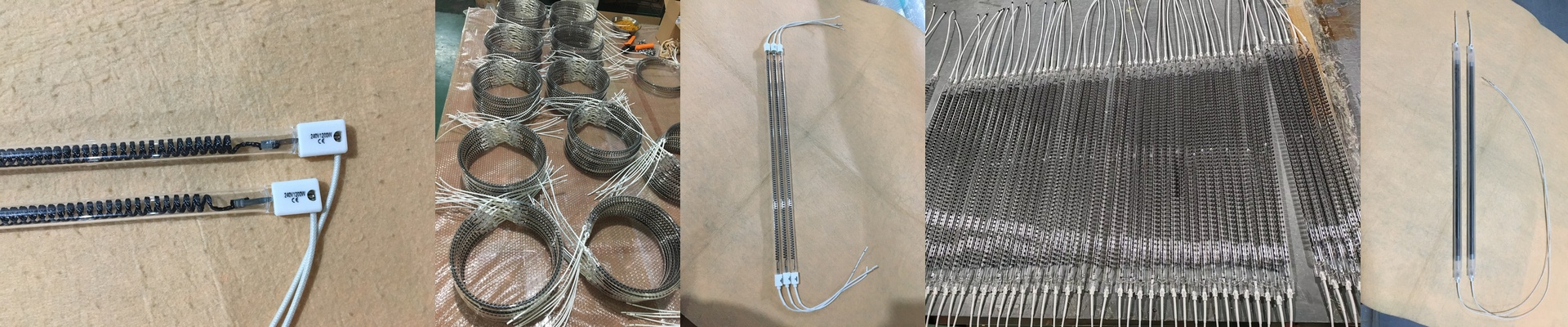
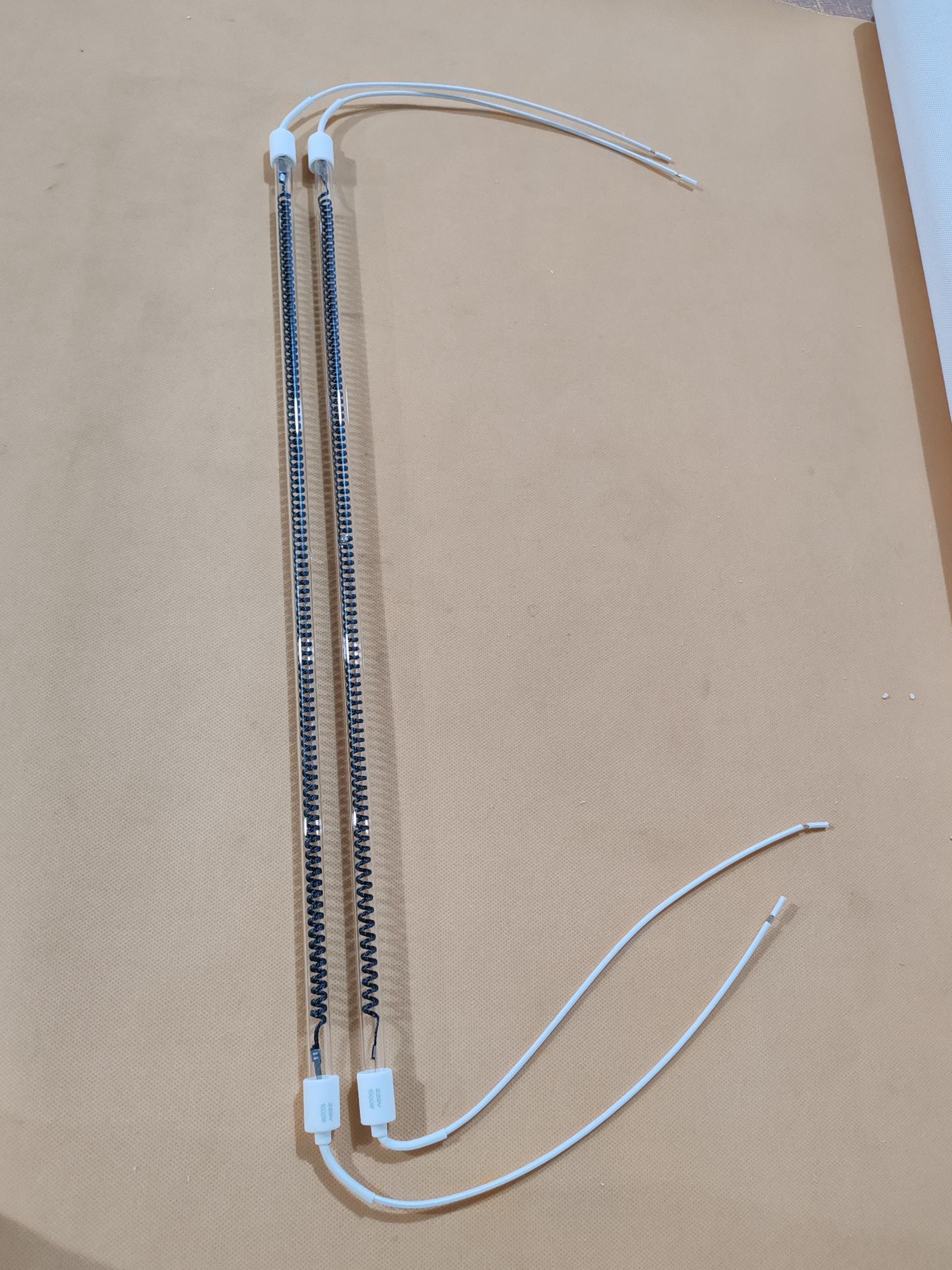
Let’s get straight to the point. We spec’d this double-tube infrared heat lamp at 4100W for one simple reason: it gets the heat into your preform, fast. On the PET blowing line, time is money. Every second counts. This wattage is the muscle you need to hit your production targets and keep things moving. And the 400V voltage? Not an accident. It keeps the current lower on the line side compared to a 230V unit. That means less voltage drop over distance, and you save on copper in the wiring. Smart, right? The 300mm length is a deliberate choice, too. It’s just long enough to cover the preform shoulder and body evenly, but compact enough to slip into those tight clamp zones. No need to redesign the whole heating module.
Built to Last, Built to Work
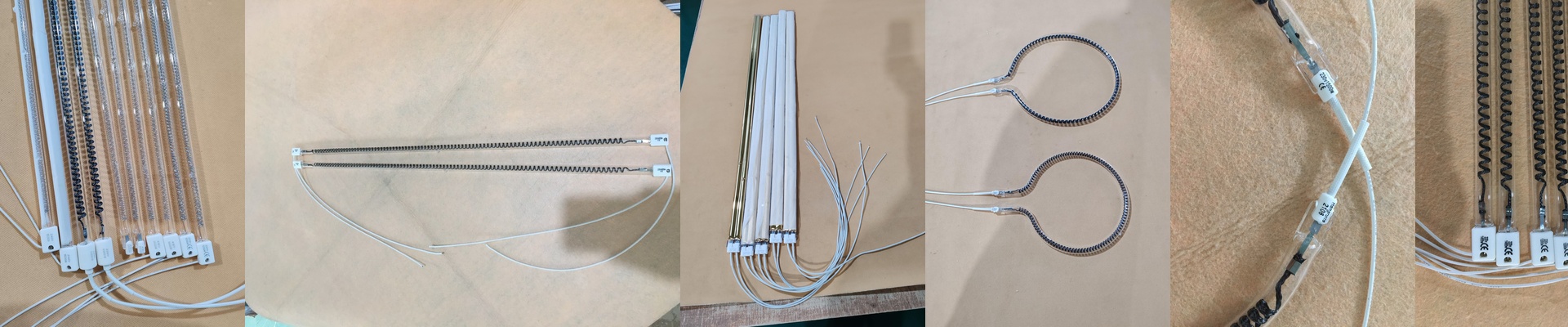
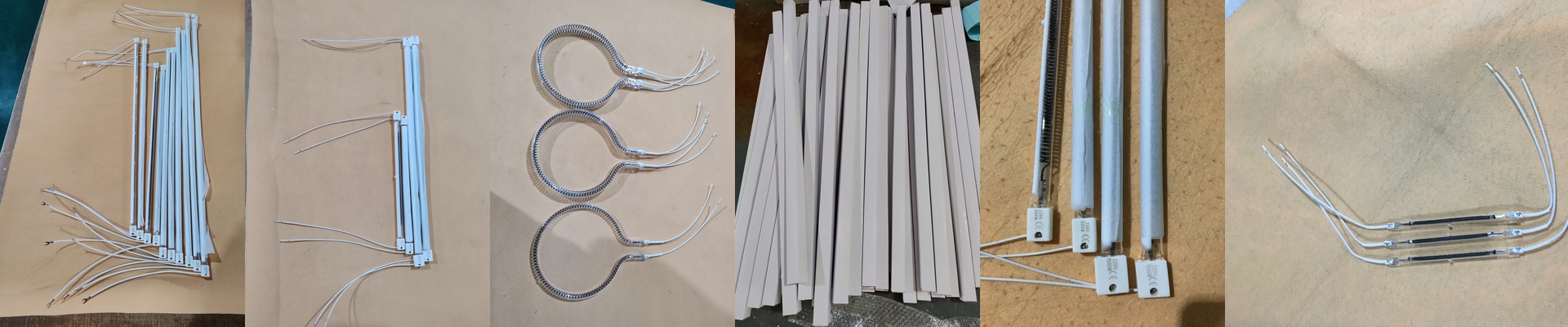
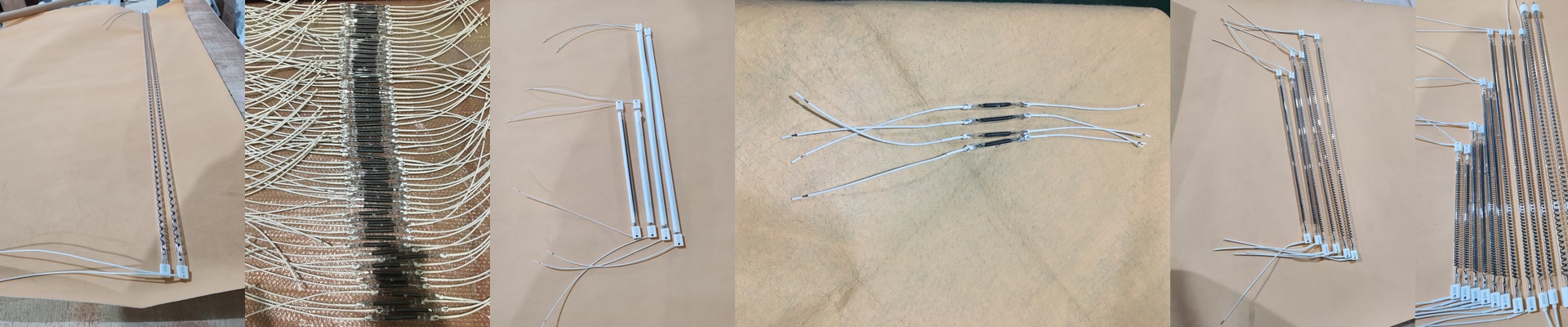
Inside the quartz envelope, you’ve got a carbon filament chosen specifically for high-intensity shortwave infrared output. It heats up almost instantly, responds on a dime to control signals, and the spectrum it produces really penetrates the PET. No more surface-only heating. The double-tube design is a clever move. It doubles the radiant area in the same footprint, which gives you better evenness and cuts down on the risk of hot spots. And the R7s connector? It’s just a straight-up, no-nonsense interface. It holds alignment, makes swapping out a lamp a quick job, and handles the constant thermal cycling without loosening up or arcing. It just works.
The Payoff: Consistent, Predictable Results
On the PET blowing line, you need heat you can count on, every single time. That’s how you get consistent wall thickness and strong bottles. This lamp delivers the energy density you need to soften the preform right on schedule, so your parison forms the way it should. That 4100W rating helps you run at faster line speeds, but let’s be real—that kind of power demands proper cooling and thermal management in the machine. You’ll get shorter warm-up times and rock-solid output, but you’ve got to size the cooling and control circuitry to match the load. Plan for it, and you’re golden.